Kaal - Rate Limiter
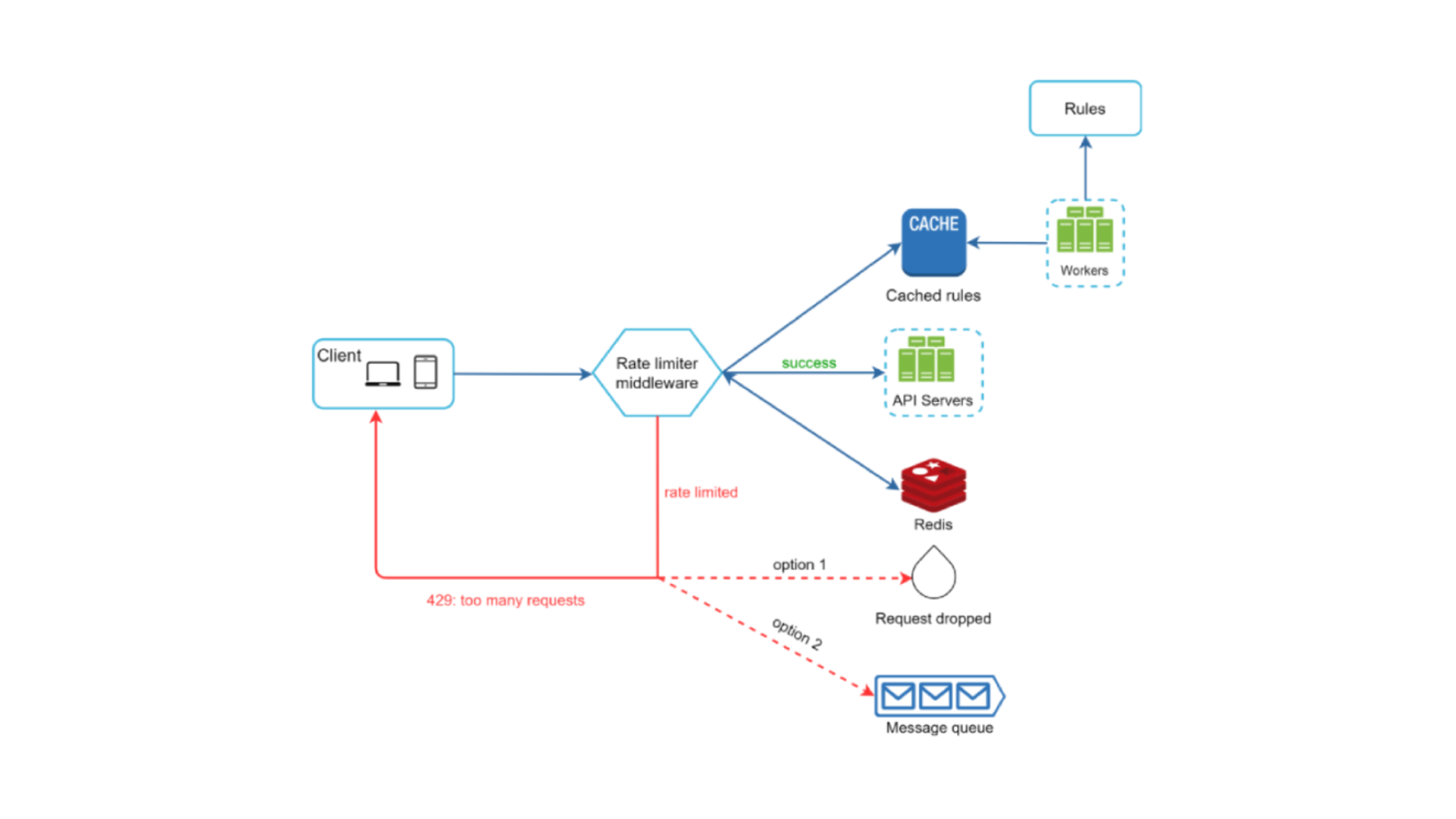
A time-aware API rate limiter built with the Token Bucket algorithm. Each client IP gets its own bucket; requests are allowed only if tokens are available.
Timeline
2026
Role
Backend Developer
Status
completed
Technology Stack
Java 21Core implementation + concurrency-friendly runtime
Core implementation + concurrency-friendly runtime
Spring Boot 3.4.5Service framework
Service framework
Redis 8.0Distributed token storage per client IP
Distributed token storage per client IP
Gradle 8.10Build + dependency management
Build + dependency management
Key Challenges
- • Designing time-based token refill logic (continuous refill by time)
- • Keeping per-client buckets consistent using Redis (distributed state)
- • Integrating rate limiting cleanly at the gateway layer
- • Returning correct throttling response (HTTP 429) with predictable behavior
Key Learnings
- • Token Bucket fundamentals (capacity, refill rate, burst handling)
- • Using Redis for shared rate-limit state across instances
- • Gateway-first architecture for cross-cutting concerns like rate limiting
- • Building deterministic request-control systems for microservices
Overview
A distributed API rate limiter built using the Token Bucket algorithm.
Kaal controls request flow at the gateway level and protects backend services from abuse in a scalable and predictable way.
What It Can Do
- Per-IP Rate Limiting: Each client IP gets its own token bucket
- Time-based Token Refill: Tokens regenerate automatically based on time
- Gateway-level Enforcement: Requests are filtered before hitting backend services
- Distributed Support with Redis: Consistent limits across multiple instances
- HTTP 429 Handling: Clean rejection when rate limits are exceeded
Why I Built This
To understand how real production systems protect APIs from traffic spikes and misuse.
This project explores rate-limiting algorithms, distributed state management with Redis, gateway-first design patterns, and core system design principles such as scalability, fault tolerance, and consistency used in modern backend architectures.